

Technical Support:
158-7527-1139

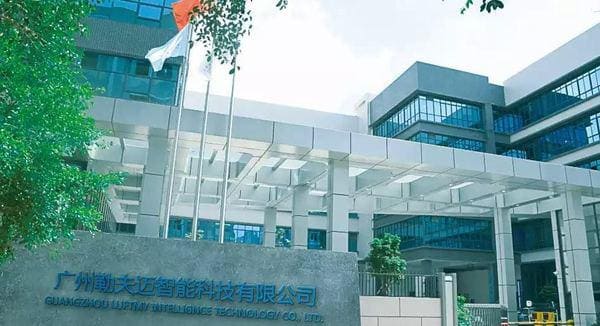
Guangzhou Luftmy Intelligent Technology Co., Ltd. was co-founded in 2012 by the Institute of Automation of the Chinese Academy of Sciences and the Fraunhofer Institute for Laser Technology at RWTH Aachen University in Germany. It focuses on the research, production, and sales of optical particulate matter sensor technology.
To date, Luftmy has an R&D team of over 50 members (including 6 PhDs and 13 Masters), with quality and production staff reaching 500. Luftmy has applied for and obtained 70 invention patents, over 120 utility model patents, and 17 core algorithm software copyrights. The company has gradually become a leading enterprise in the global optical sensor industry.
In 2015, the German Siemens Group reached a strategic cooperation with Luftmy, providing significant support in technical R&D, experimental equipment, and the establishment of production quality systems. In 2017, the Siemens & Luftmy Sensor Research Institute was established, focusing on sensor technology, algorithms, research, and applications.
At this stage, Luftmy primarily focuses on the production of three types of sensors: dust sensors, infrared sensors, and laser sensors.
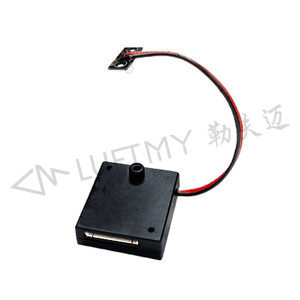
1. Dust Sensors
The working principle of the dust sensor utilizes the optical through-beam principle. Using an infrared through-beam method, when dust particles pass through the infrared light zone, the receiving end detects changes in the optical signal corresponding to the particles. Processed through patented particle signal acquisition technology, the particle data is compared and analyzed against material data in the database to obtain precise particle concentration data.
2. Infrared Sensors
Infrared sensors use the principle of optical scattering to obtain particulate matter concentration. Particles and molecules produce light scattering under illumination while simultaneously absorbing part of the incident light energy. When a beam of parallel monochromatic light enters the measured particle field, it is affected by scattering and absorption, causing the light intensity to attenuate. By determining the relative attenuation rate of the incident light through the concentration field, the relative concentration of dust can be reflected linearly. The intensity of light is proportional to the strength of the converted electrical signal; by measuring the electrical signal, the concentration can be determined and communicated via MCU using PWM or UART.
Infrared sensor applications: air conditioners with purification, air purifiers, vehicle purification equipment, portable detectors, fresh air systems, smart detectors, etc.
3. Laser Sensors
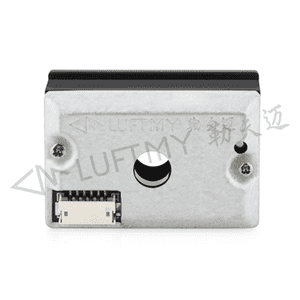
Laser sensors adopt the Mie scattering principle. The laser sensor irradiates suspended particles in the air to produce light scattering. A photodetector collects the scattered light intensity within a specific angle range and converts it linearly into voltage. The data processing system then calculates the equivalent particle size and the number of particles of different sizes per unit volume based on Mie theory.
Laser sensor applications: air purifiers, air conditioners with purification, PM2.5 detectors, range hoods, smoke alarms, fresh air systems, dedicated PM2.5 sensors, air probes, wearable devices, etc.
Luftmy's gradual rise as a global leader in the optical sensor industry relies on six major advantages:
1. Precision Manufacturing: A global manufacturer integrating R&D, production, and sales, using the strictest German quality standards and advanced equipment to continuously improve quality.
2. Quality Assurance: Implementing ISO9001 and TS16949 quality systems to make quality more convincing.
3. Complete Testing System: The lab is managed under the ISO/IEC 17025:2005 "General requirements for the competence of testing and calibration laboratories" accreditation system and is CNAS accredited.
4. Efficient Assistance: With professional innovative technology and mature processes, Luftmy guarantees high-quality products and comprehensive back-end service support.
5. Excellent Service: Professionalism and integrity permeate every aspect of technical support, production engineering, and customer service.
6. Outstanding Team: Employees are top talents from various technical fields, supported by continuous incentive, training, and assessment programs.
