

Technical Support:
158-7527-1139

Non-Dispersive Infrared (NDIR) Technology: This is one of the most commonly used CO2 detection technologies. NDIR sensors emit infrared light of a specific wavelength. When the light passes through a sample gas containing CO2, CO2 molecules absorb part of the infrared light. The concentration of CO2 is calculated by measuring the amount of light absorbed.
Photoacoustic Spectroscopy Technology: Utilizing the absorption characteristics of CO2 molecules for specific wavelengths of light, photoacoustic effect sensors can detect the presence and concentration of CO2.
Chemical Sensors: Some types of CO2 sensors use chemical reactions to detect CO2, for example, by indicating changes in CO2 concentration through pH changes or color changes.
Capacitive and Resistive Sensors: These sensors detect CO2 concentration by measuring changes in capacitance or resistance caused by the adsorption or reaction of CO2 on specific materials.
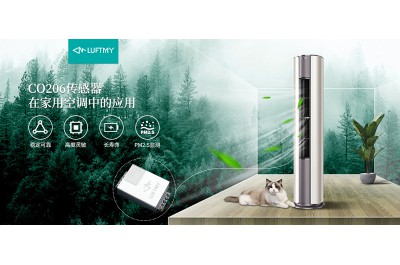
Indoor Air Quality Monitoring: In public places such as offices, schools, and hospitals, CO2 sensors can monitor indoor air quality, help adjust ventilation systems, and ensure air quality.
Industrial Process Control: In industrial processes such as food processing, brewing, and beverage carbonation, precise control of CO2 concentration is critical to product quality.
Environmental Monitoring: In greenhouse gas emission monitoring and environmental science research, CO2 sensors provide continuous, real-time data to help scientists and policymakers understand and control the greenhouse effect.
Agriculture and Horticulture: In plant growth chambers and greenhouses, CO2 sensors can monitor and regulate CO2 concentration to optimize plant photosynthesis and growth.
Respiratory Monitoring: In the medical field, CO2 sensors can monitor the concentration of CO2 in ventilators to ensure the safety and effectiveness of patient breathing.
Fire and Safety: At fire scenes, CO2 sensors can detect the CO2 concentration in the air, helping to evaluate the severity of the fire and control the fire.
Real-time Monitoring: CO2 sensors can provide real-time CO2 concentration data, making environmental control more timely and precise.
High Sensitivity and Accuracy: Modern CO2 sensors have high sensitivity and accuracy, capable of detecting minute changes in CO2 concentration.
Easy Integration: CO2 sensors can be easily integrated into various smart systems, such as smart homes, smart buildings, etc.
Low Maintenance Costs: Many CO2 sensors are designed for low maintenance, reducing long-term operating costs.
